Hedge Trimming Barking: Recycling and Sustainability Commitment
At Hedge Trimming Barking we take a proactive role in creating an eco-friendly waste disposal area and a sustainable rubbish gardening area across Barking and surrounding boroughs. Our approach to hedge trimming in Barking focuses on reducing landfill, increasing reuse, and supporting local circular economy initiatives. We combine responsible site practices with community partnerships, measurable targets and low-impact transport to deliver green garden maintenance.Our Recycling Targets and What They Mean
We have set a clear recycling percentage target: a 70% diversion of all garden waste and trimings away from landfill within the next two years. This includes composting, chipping, and material reuse programs. The target is ambitious but grounded in boroughs' approach to waste separation, where yard waste, food waste and mixed recycling are increasingly separated at source to improve material recovery.
Practical Separation on Site
On every job — whether routine Barking hedge maintenance or larger clearance works — our teams separate materials at collection. Typical on-site separation includes:- green waste for composting or biomass;
- untreated wood for chipping and reuse;
- metal stakes and wire removed for metal recycling;
- plastics and packaging sorted for the local mixed recycling stream.
Local Transfer Stations and Where Materials Go
We regularly use authorised local transfer stations and recycling hubs across the boroughs serving Barking, ensuring material flows are transparent. Materials are taken to licensed facilities that specialise in green waste, wood chipping and composting. By partnering with these transfer stations we maintain traceability of waste and can report recycling rates back to clients and to our internal sustainability dashboard. Low-Carbon Vans and LogisticsOur fleet includes low-carbon vans and hybrids tailored for urban work in Barking. Using low-emission vehicles reduces the carbon footprint associated with transport of trimmings and clippings to transfer stations. Where feasible we schedule multi-stop runs to maximise load efficiency and minimise empty miles. This logistics strategy supports our recycling percentage target and reduces overall emissions linked to garden clearance.
Composting, Chipping and Resource Recovery
We prioritise composting and chipping as primary recycling routes for garden waste. Chipped wood becomes mulch for local community projects, and composted green waste is supplied back to soil improvement schemes. These activities strengthen the sustainable rubbish gardening area by returning nutrients and organic matter to local parks and allotments when possible.Partnerships with Charities and Local Initiatives
We have active partnerships with local charities that run community gardens, re-use centres and allotment projects. Materials that are reusable—such as untreated logs, later-season brash suitable for habitat piles, or bundled shrubs—are offered to charity partners for landscaping projects. These collaborations support social value while diverting useful materials from disposal. How the Boroughs' Waste Separation HelpsMany boroughs around Barking have clear sorting rules that encourage residents and businesses to separate food, garden and mixed recyclables. We align our collection and sorting processes with these rules to ensure high capture rates and fewer rejected loads at transfer stations. That local synergy makes our sustainable hedge care services more effective.
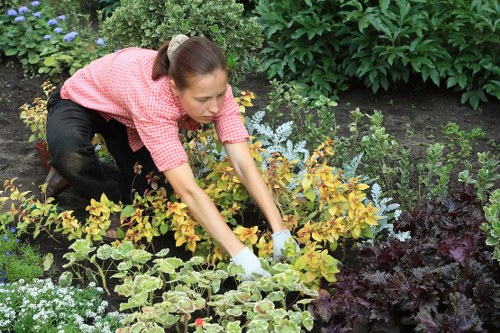 Community Education and Best PracticesWe also invest in light-touch community education: explaining composting, demonstrating safe chipping techniques and showing how to create a small sustainable rubbish gardening area at home. Our teams use eco-aware practices during every job: avoiding burning trimmings, reusing timber where safe, and reducing single-use plastics in our packing and transport. By integrating these habits, we extend the environmental benefit beyond each individual service visit.
Monitoring Progress and Reporting
Progress against the 70% recycling target is monitored monthly: loads are recorded, volumes of chipped material and composted green waste are logged, and transfers to charity or community projects are tracked. This gives us a clear audit trail and helps to refine routes, vehicle use and on-site separation procedures to continually improve outcomes.Sustainable Materials and Circular Outcomes
Where possible, Barking hedge trimming outputs feed into circular outcomes: mulch and compost return to green spaces; reclaimed wood becomes garden features; metal is recycled; and clean plastics join the borough recycling stream. These processes support a resilient sustainable rubbish gardening area and demonstrate how responsible hedge care in Barking and nearby boroughs can contribute to wider environmental goals.In summary, our commitment at Hedge Trimming Barking spans measurable recycling targets, the use of low-carbon vans, partnering with transfer stations and charities, and following borough-led waste separation systems. Together these efforts create a verifiable, eco-friendly waste disposal area and a sustainable approach to rubbish gardening that benefits clients, communities and the local environment.